Y A Y O R O Z U: E I G H T M I L L I O N G O D S
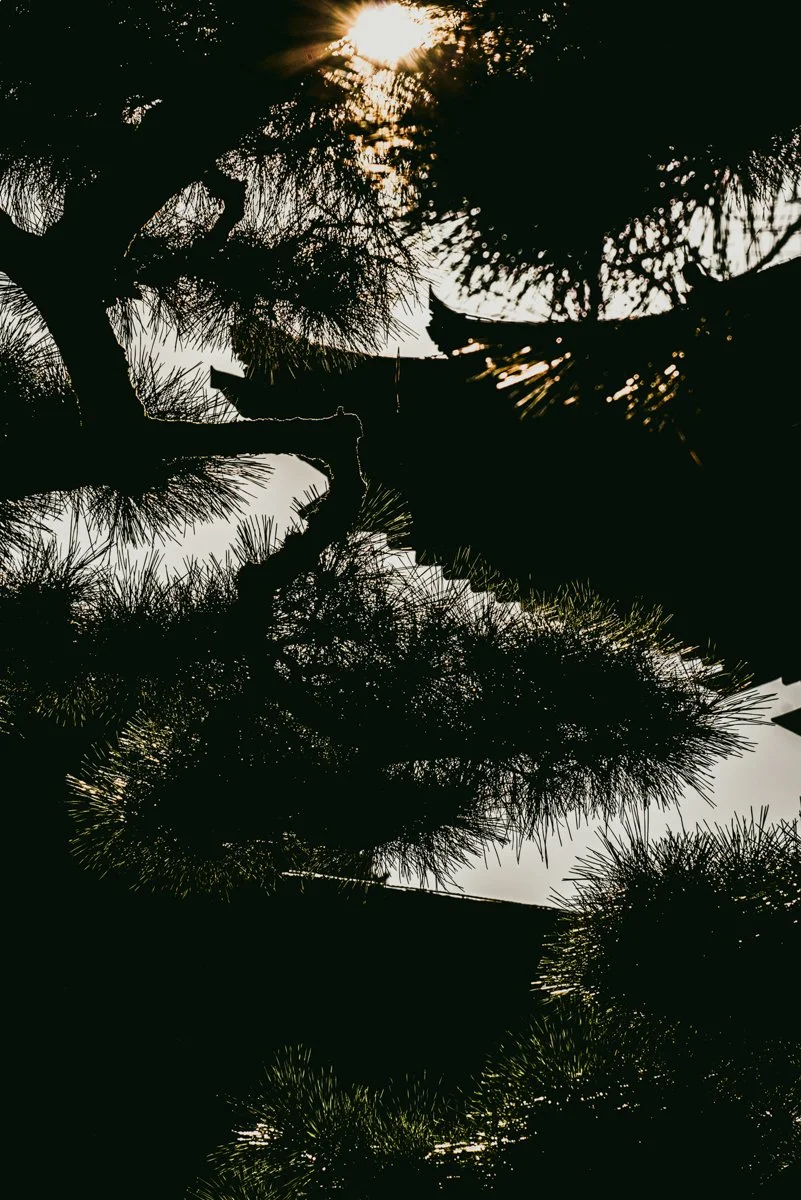
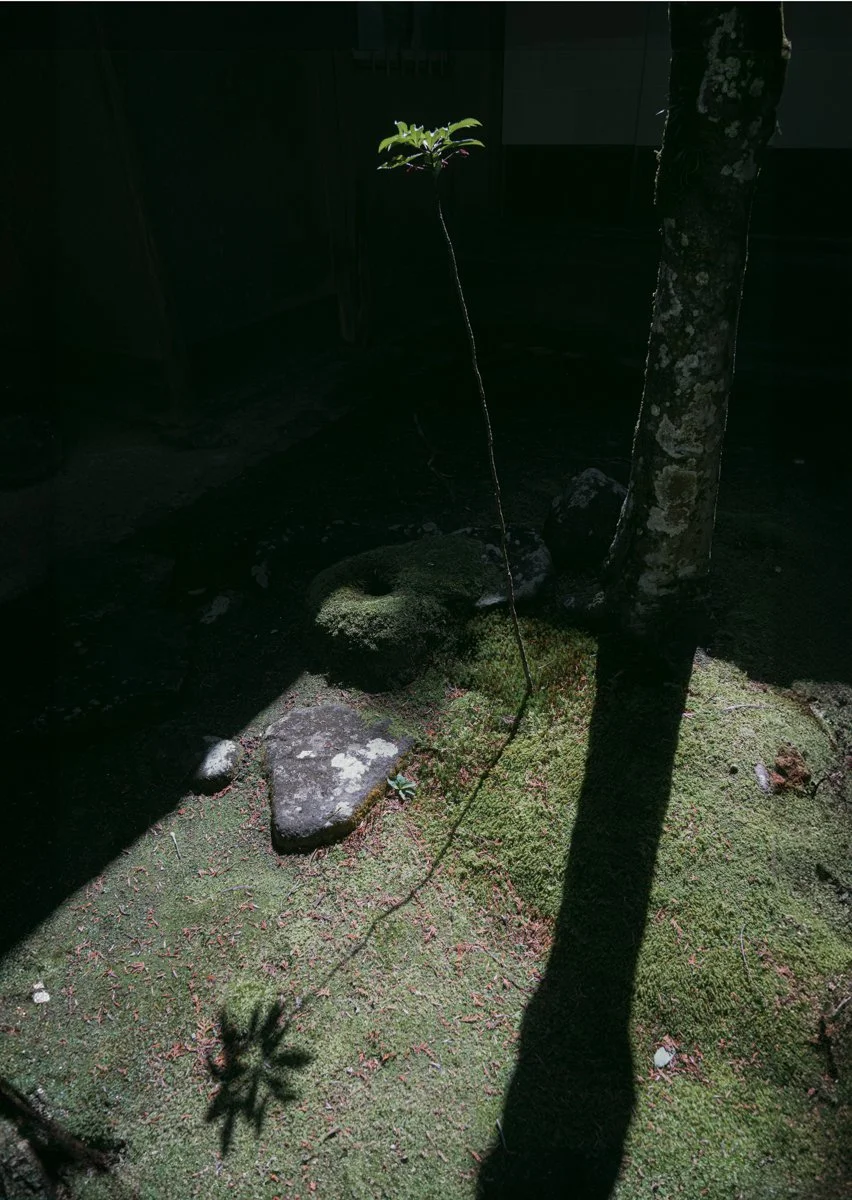
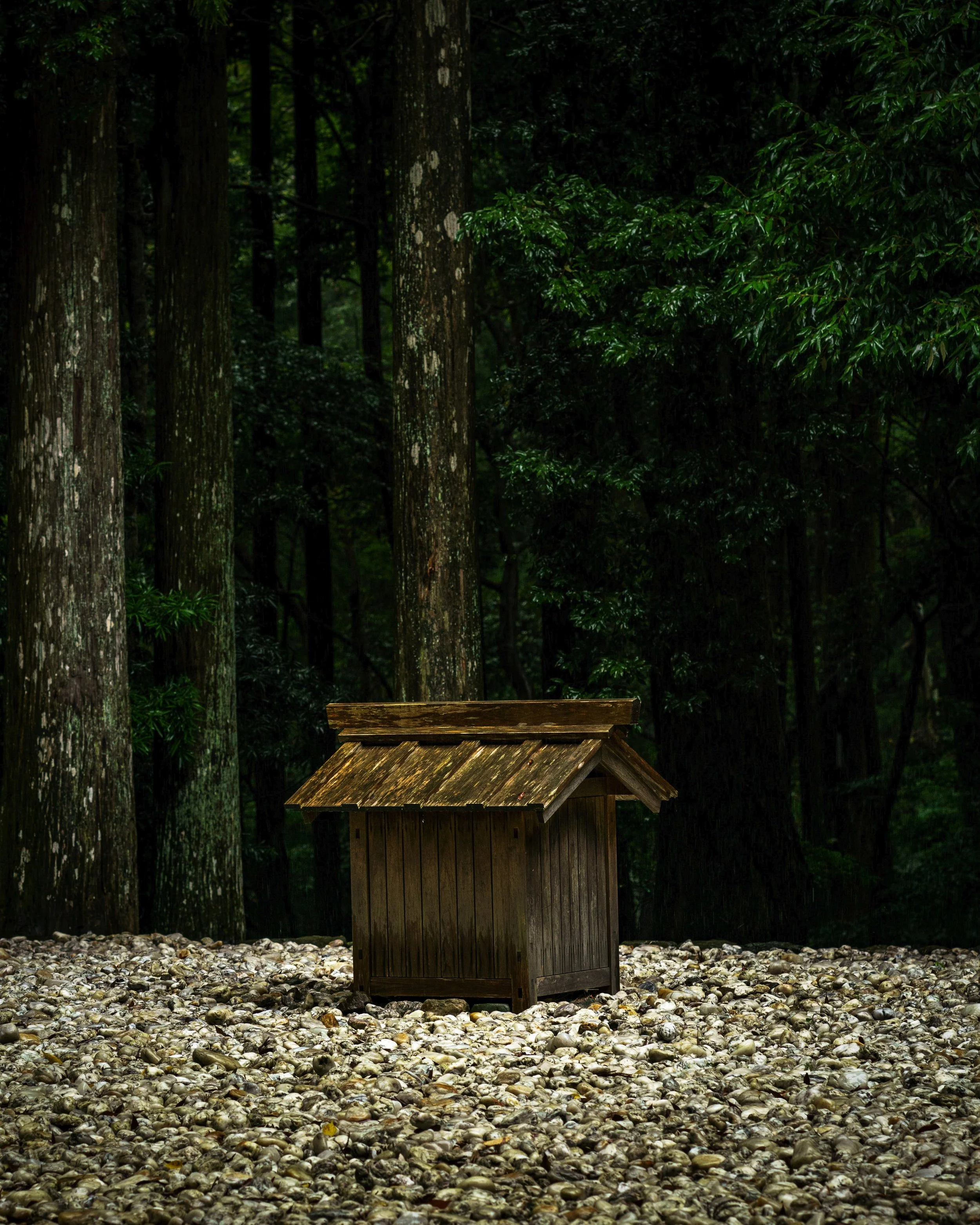
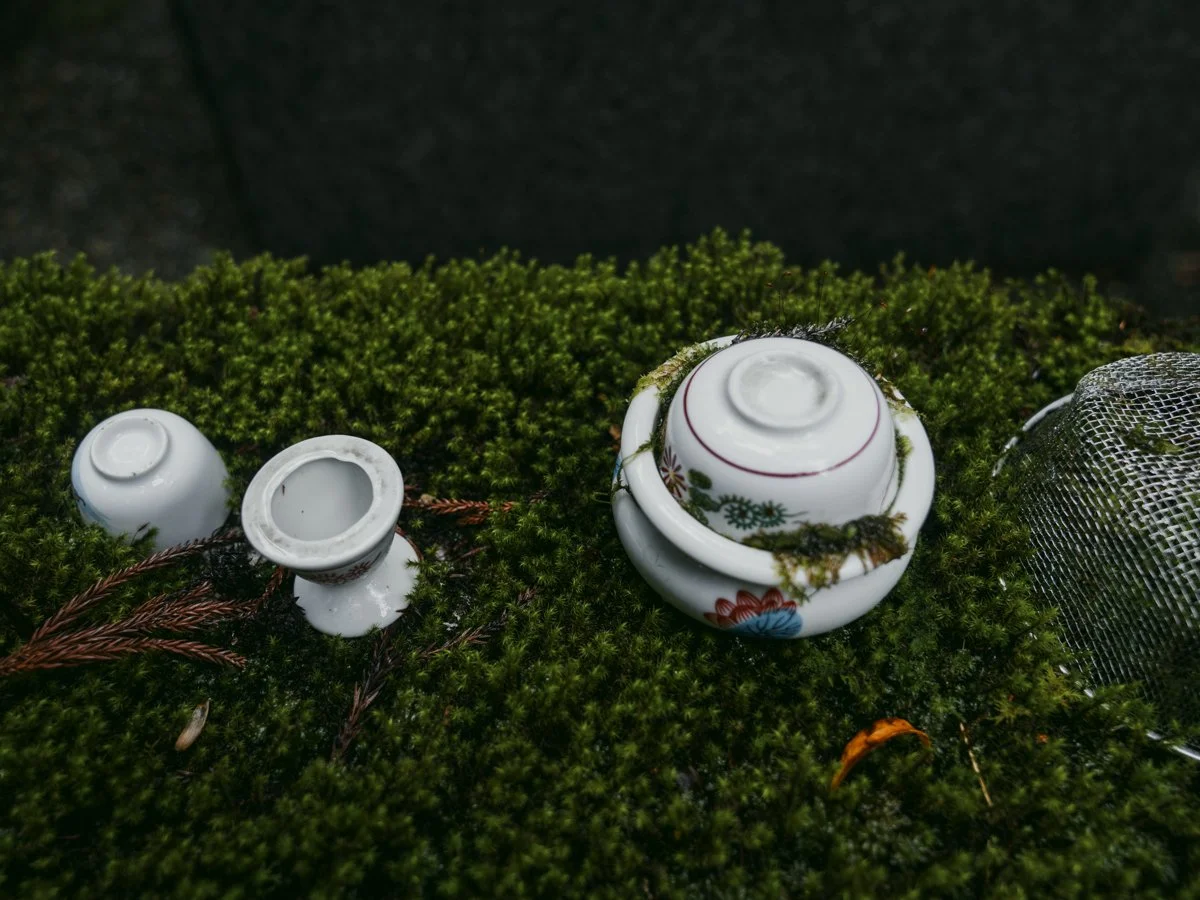
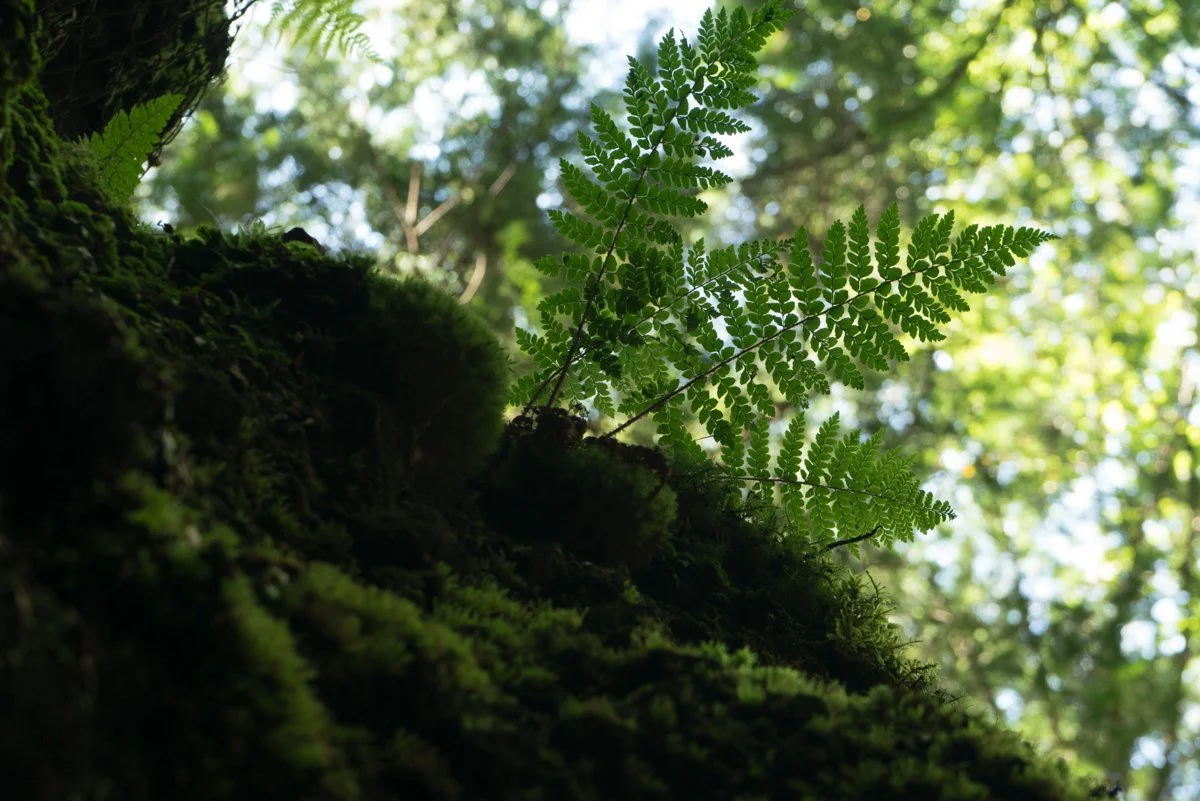
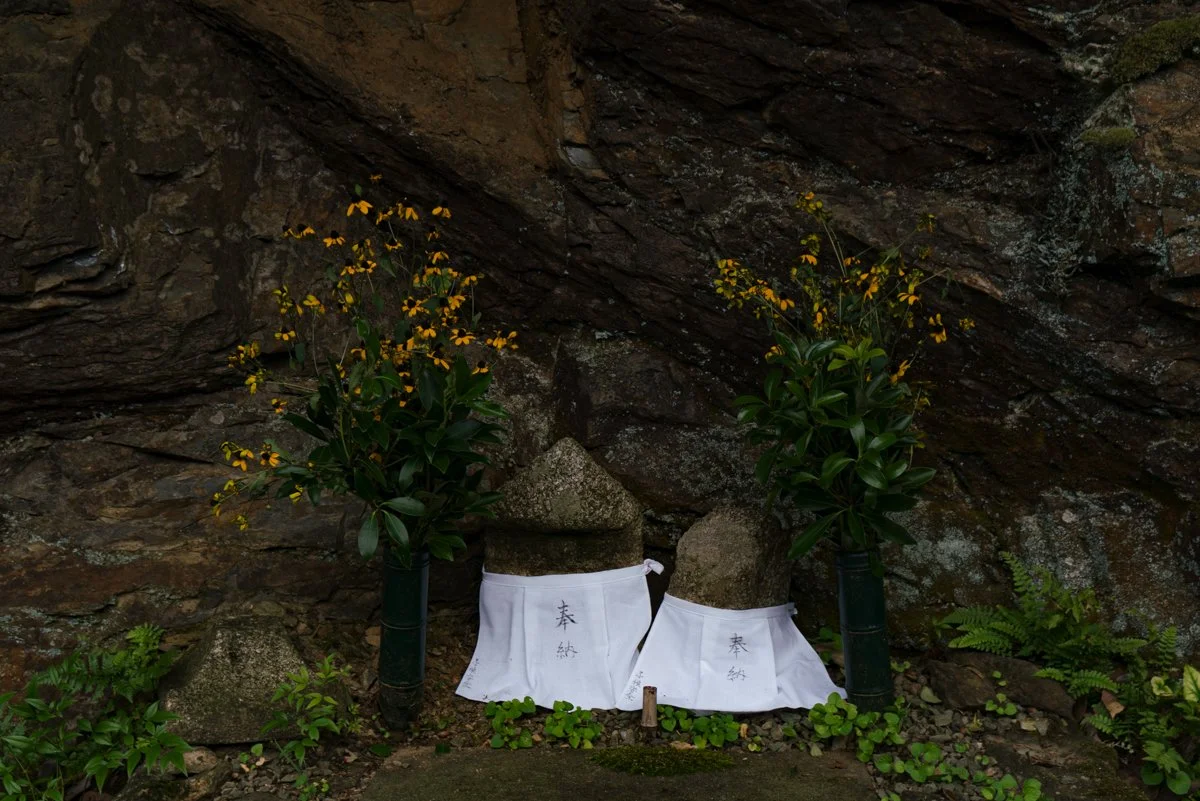
An old Japanese saying has it that a kami dwells within each daikon pulled from the ground, and there are seven gods in each grain of rice. Some say there are eight million kami in Japan (Yaoyorozu no Kami 八百万の神), but in reality, nobody is able to count. These Shinto gods are believed to be formless and invisible. Although omnipresent, they are more deeply entwined in nature – they perch near streams and waterfalls, fly above impenetrable forests, lurk amid rice paddies. People can’t see them, yet they feel close to them. They sense their presence and it fills them with trepidation.
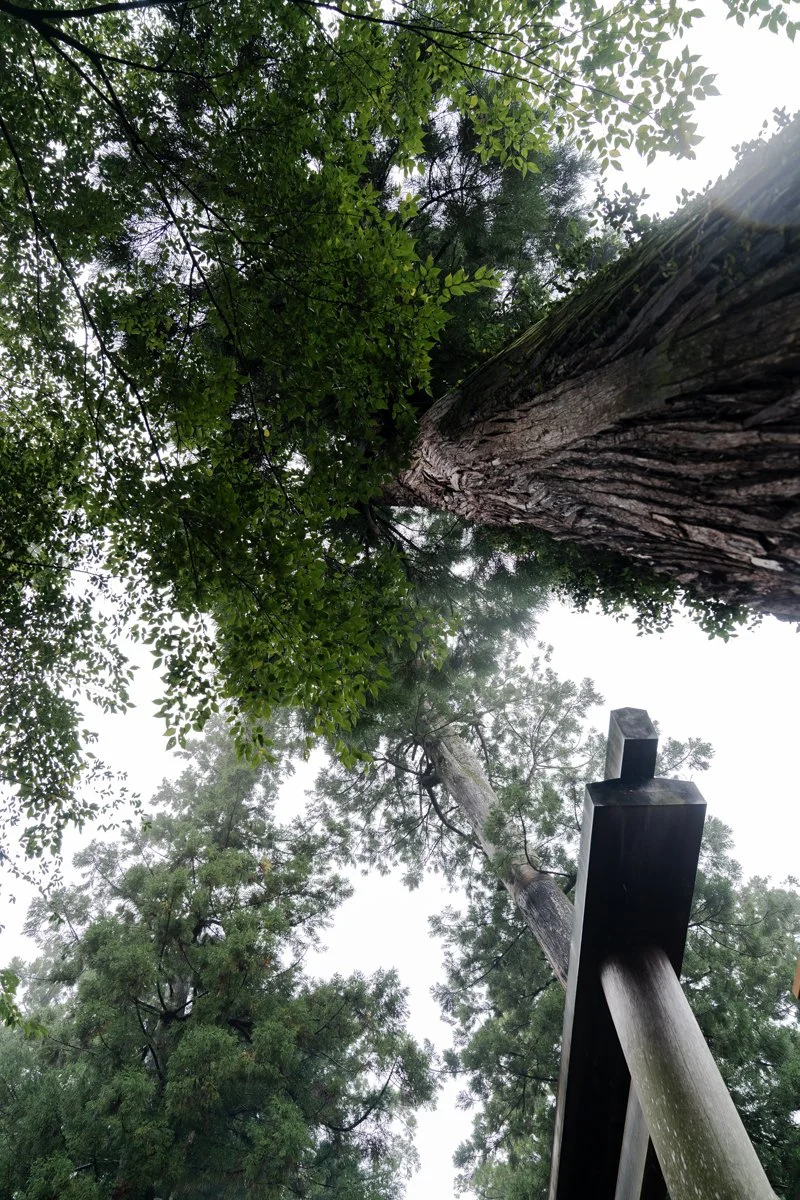
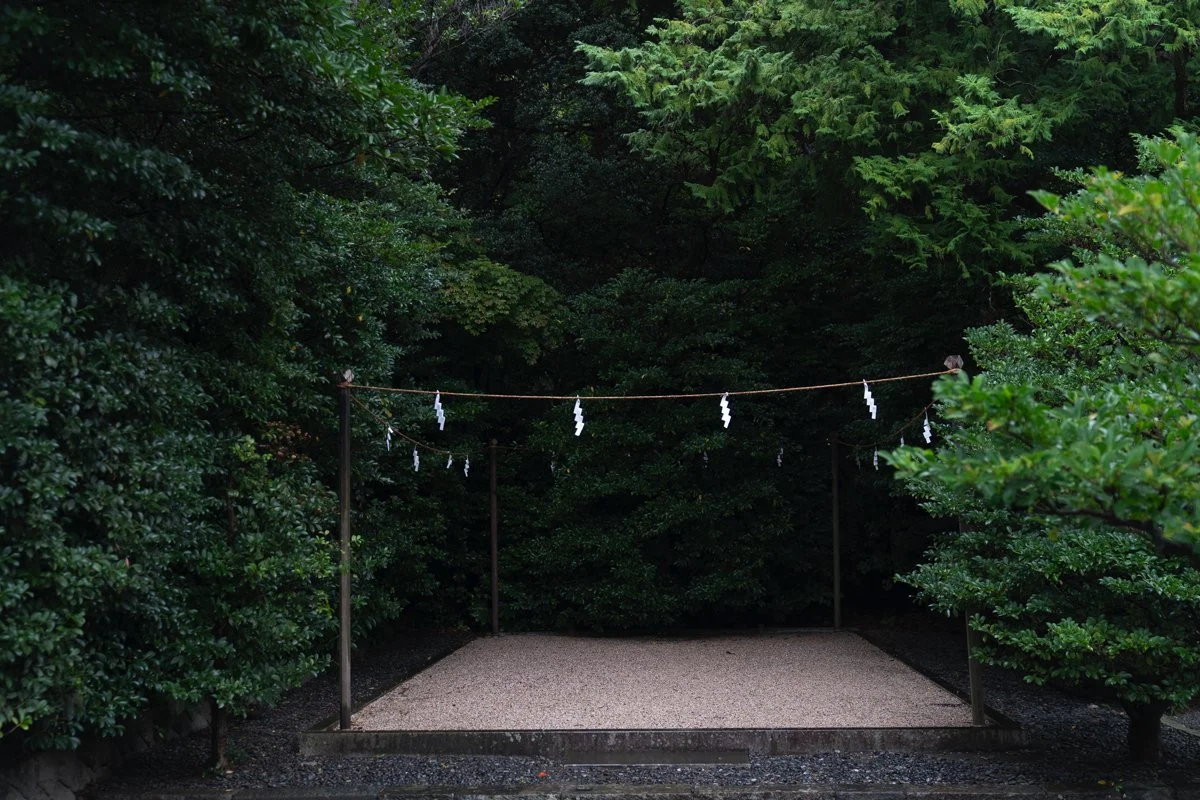
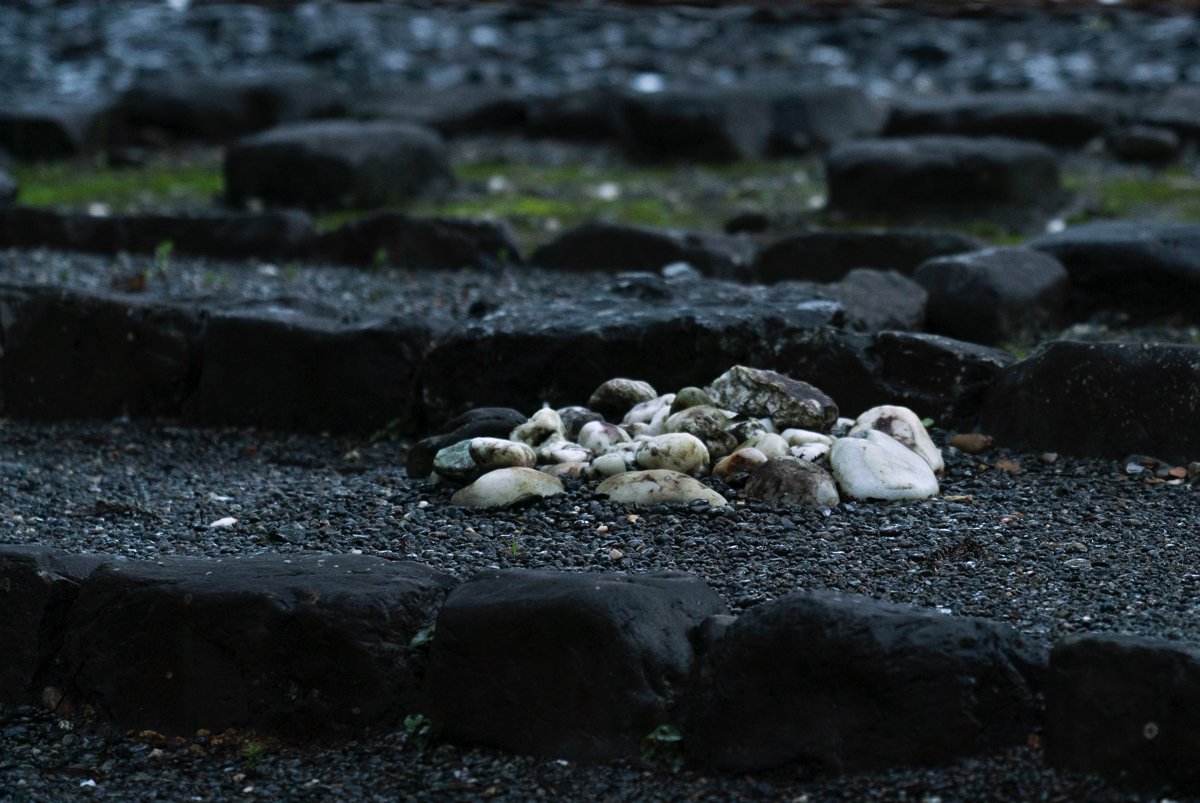
In ancient times, whatever seemed strikingly impressive or possessed the quality of excellence was thought to be inhabited by a kami. Such objects – a solitary rock, a gnarled tree, a roaring waterfall – would be venerated. To mark them as sacred, people would encircle them with a rope (shimenawa) and mark them with white zig-zag signs (shide). Those zig-zag signs also had purifying qualities – they could ward off evil spirits.
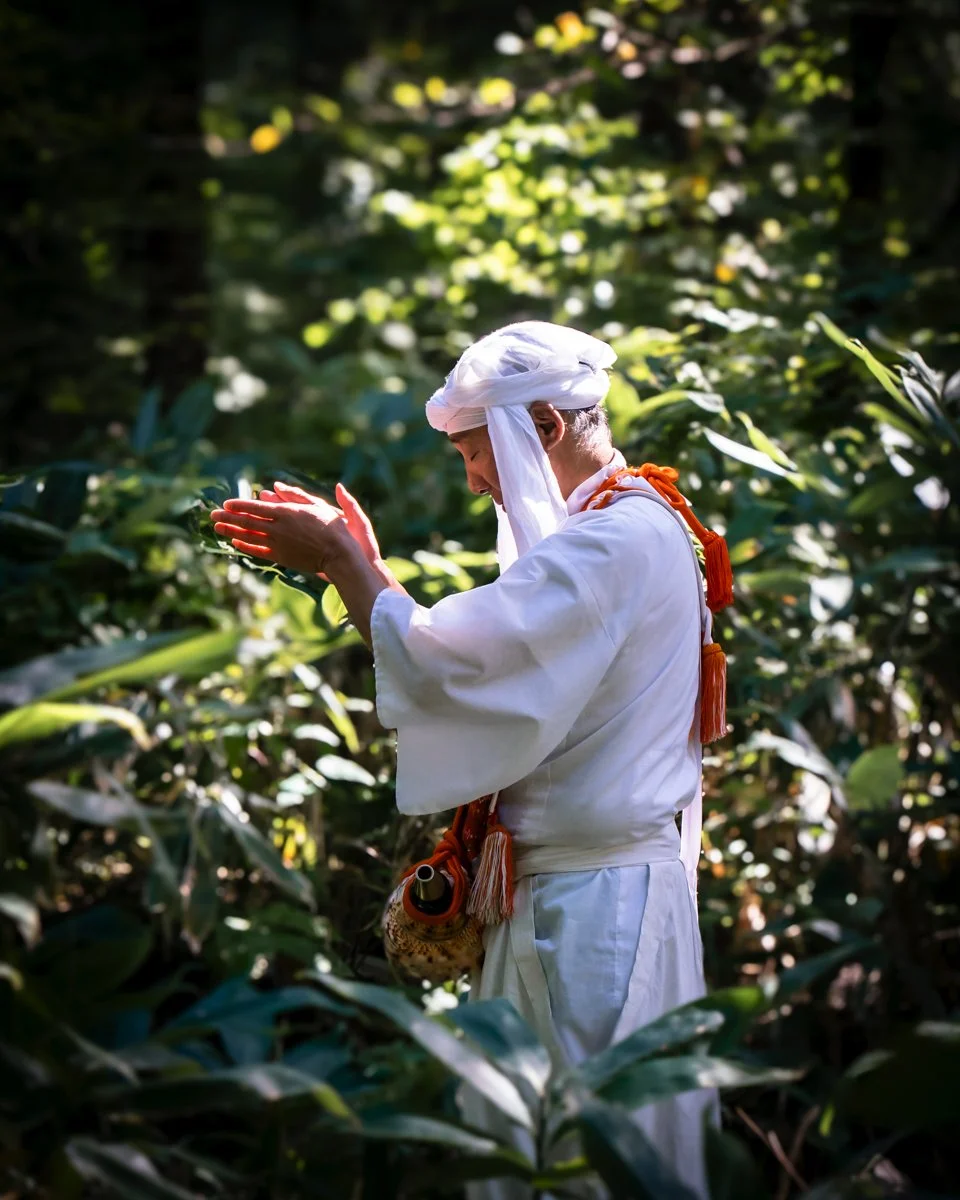
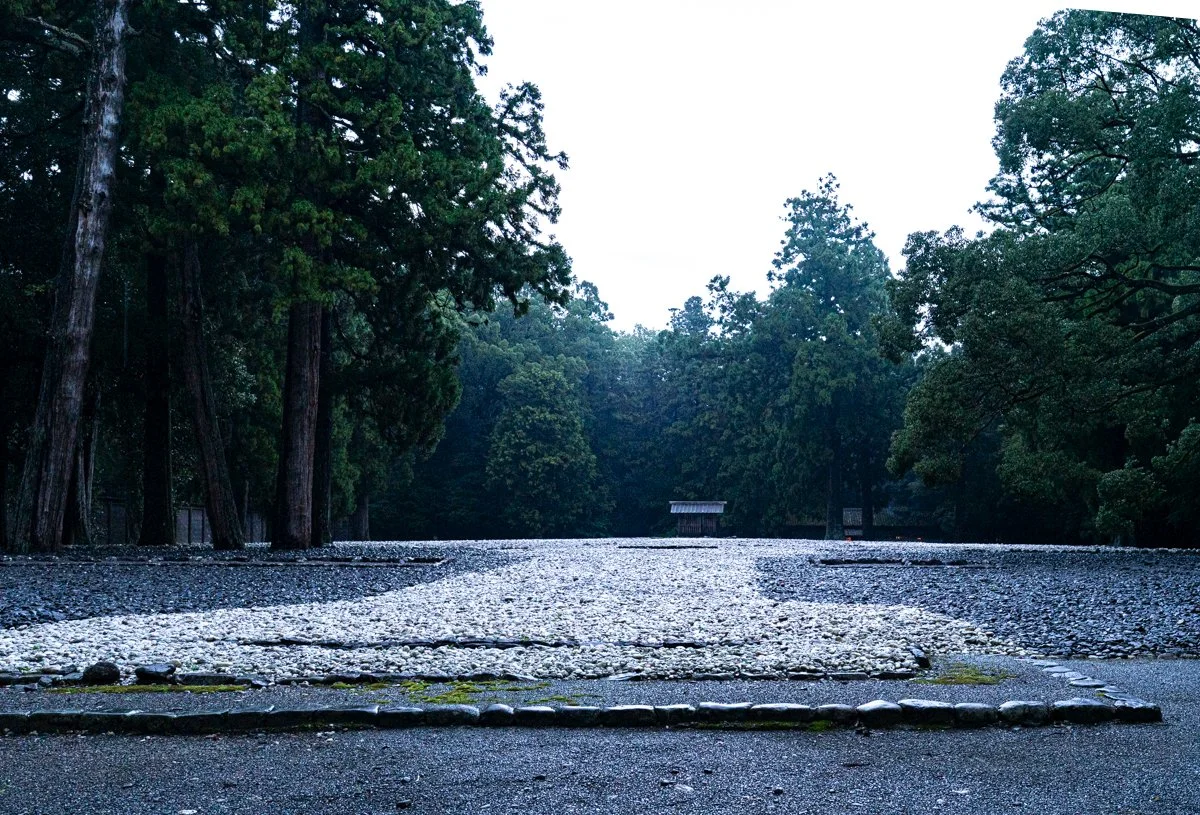
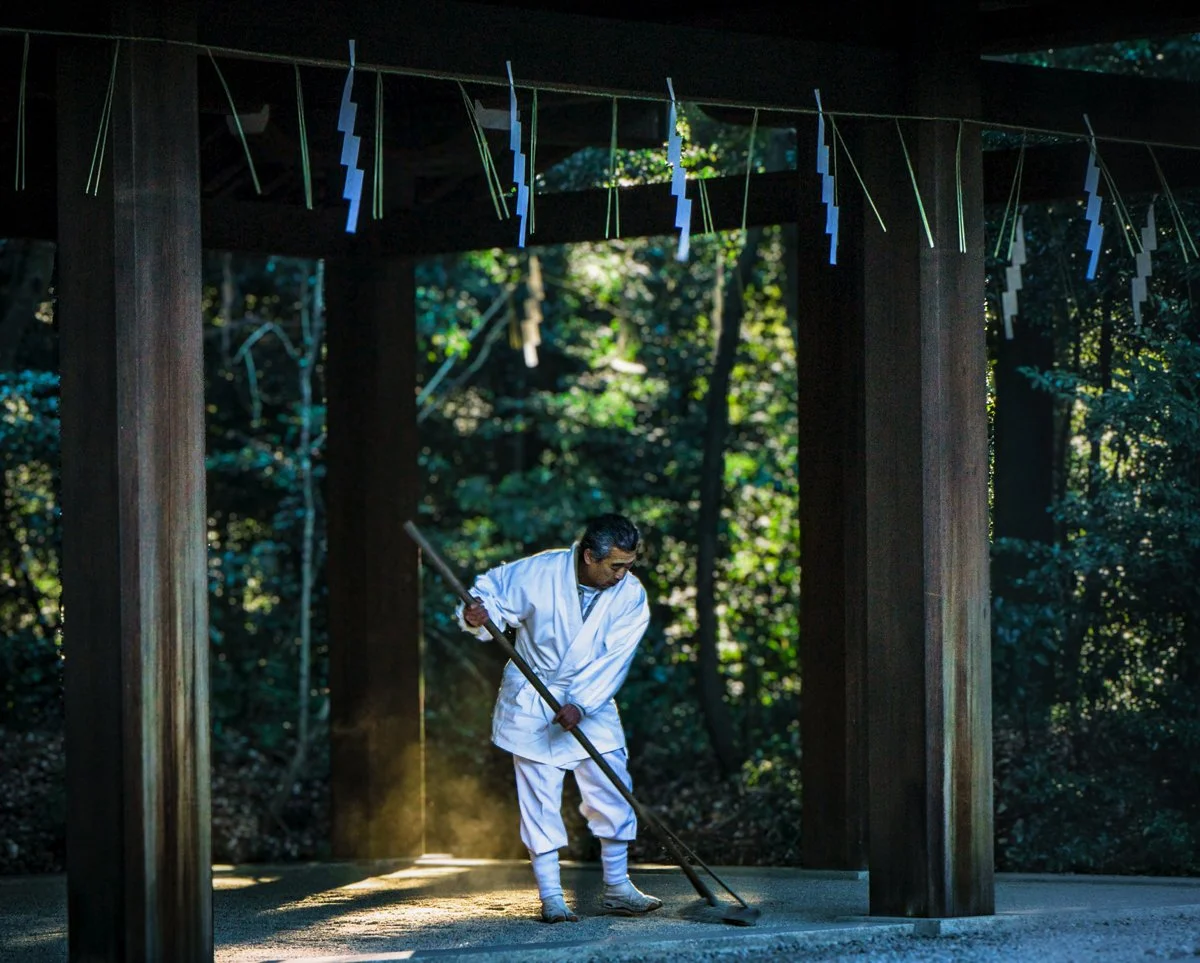
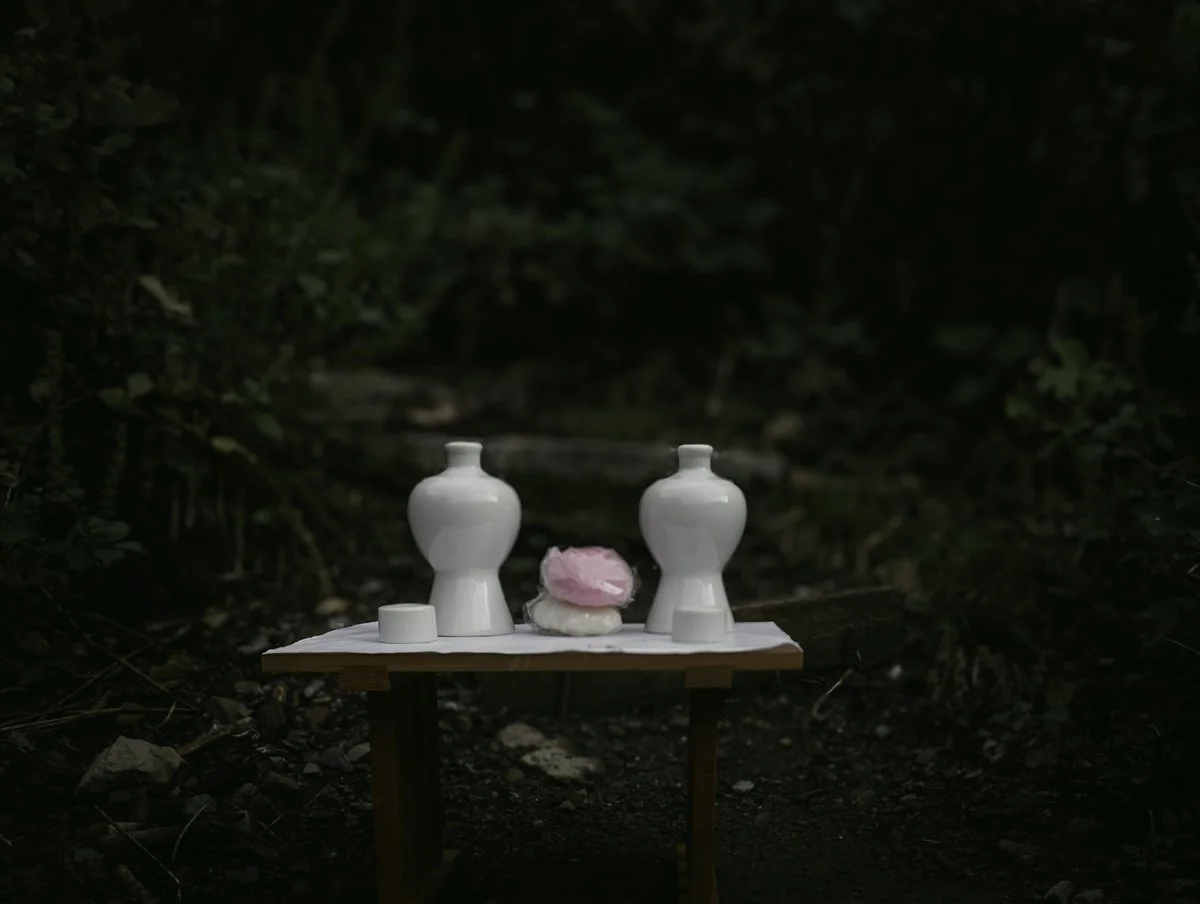
Most kami are benevolent, but some, possessed by evil spirits, can be malicious. To avoid their harm, followers of Shinto engaged in ritual practices, which often involve the act of cleansing themselves or preparing (clearing) of places that can potentially be visited by gods.
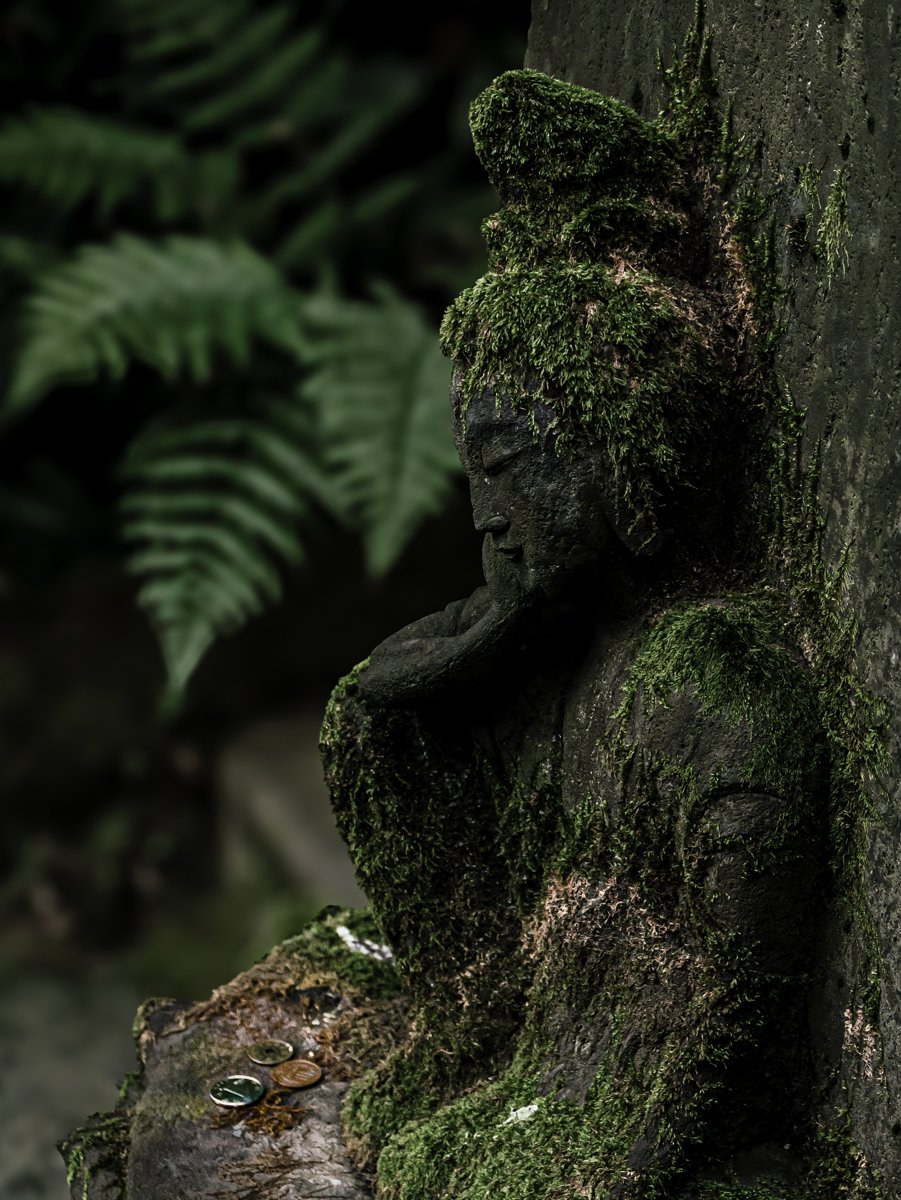
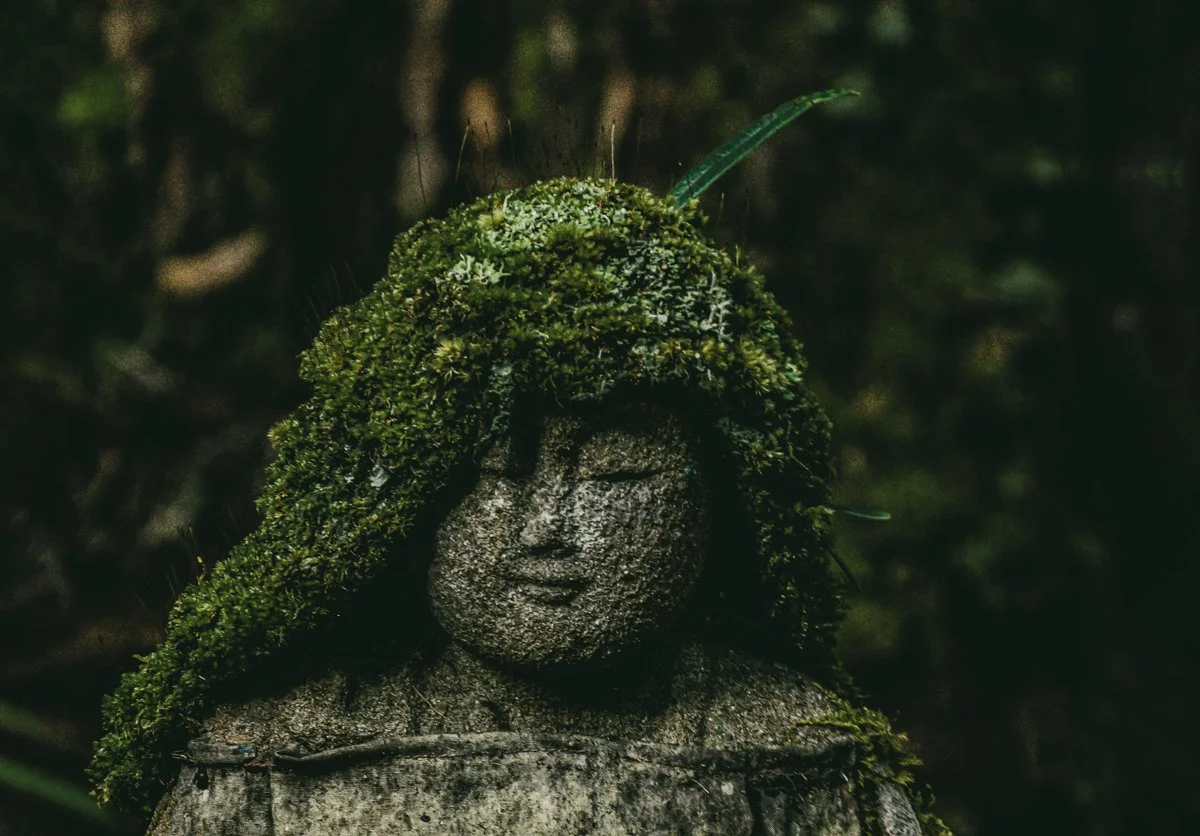
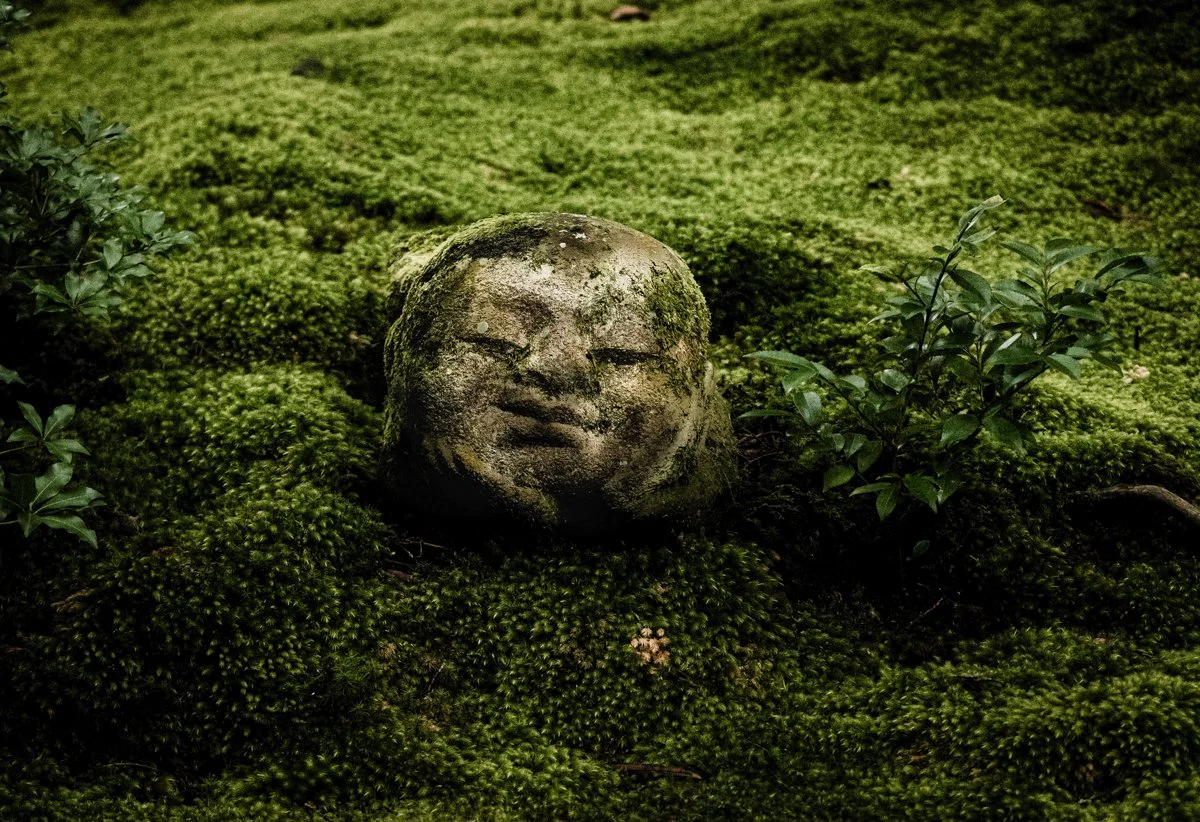
In most parts of the world, such animistic beliefs would vanish, or morph and be gradually absorbed into the universal faiths. In Japan, they were reinforced by Buddhism and perpetuated into modern times. With the arrival of Buddhism in the middle of the 6th century, more gods were welcomed. Kamis mingled with Buddhas and Bodhisattvas, some of whom were believed to be reincarnations of the old Shinto spirits.
In the Japanese language, this divine realm of coexisting Shinto and Buddhist spirits is referred to as shizen. The word, usually translated into English as nature, signifies something that is “self-created” (the literal meaning of the two ideograms that form shizen, 自然, is “that which is of itself”).
Interestingly, shizen is a fairly recent addition to the Japanese language – it was adopted from the Chinese only after the arrival of Buddhism. Prior to that, the Japanese had no single concept to express the totality of mountains, rivers, plants, and animals. Nature – the sacred realm – was shrouded in mystery and considered impossible to define with words.